
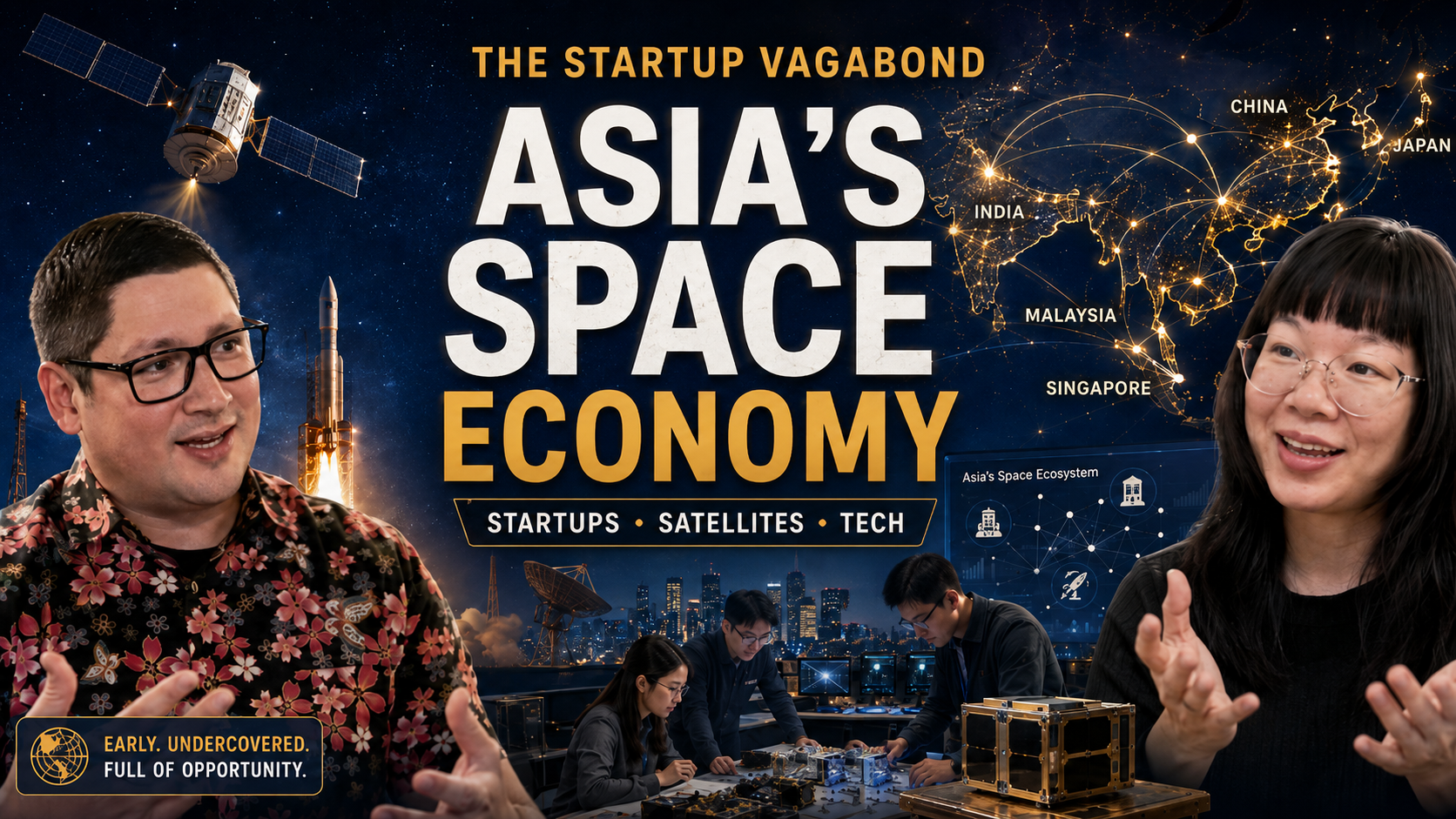
This episode of The Startup Vagabond is a conversation with Shirley Saw, founder of Liftoff Asia, a publication covering the Asian space economy through independent journalism, education, and ecosystem storytelling. We talk about why space technology in Asia is about much more than rockets. Shirley breaks down how different countries across the region approach the space economy, from China’s sovereignty-driven lunar ambitions, to Japan’s partnership-focused strategy with NASA and JAXA, to India’s growing space startup ecosystem, to Singapore’s use of soft power, neutrality, and capital attraction. We also discuss one of the biggest challenges in Southeast Asia: the talent gap. The region has strong technical talent, but investors often overlook it in favor of better-known markets. That creates a cycle where high-quality founders, engineers, and operators may leave for ecosystems with more capital, visibility, and support. The conversation also gets into venture capital trends, physical AI, hardware startups, satellite competition, Starlink alternatives, and why cheaper launch costs could create more room for new players in connectivity and space infrastructure. In the second half, Shirley shares advice for aspiring founders, especially those building hardware or inventory-heavy businesses. The key lessons: understand your financial runway, know your costs, listen carefully, and solve real problems instead of chasing hype. The broader takeaway: Asia’s space economy is still early, fragmented, and undercovered, but the opportunity is real. The next generation of space companies will need more than engineering talent. They will need storytelling, education, capital, policy support, and founders who can navigate the region’s complexity.