
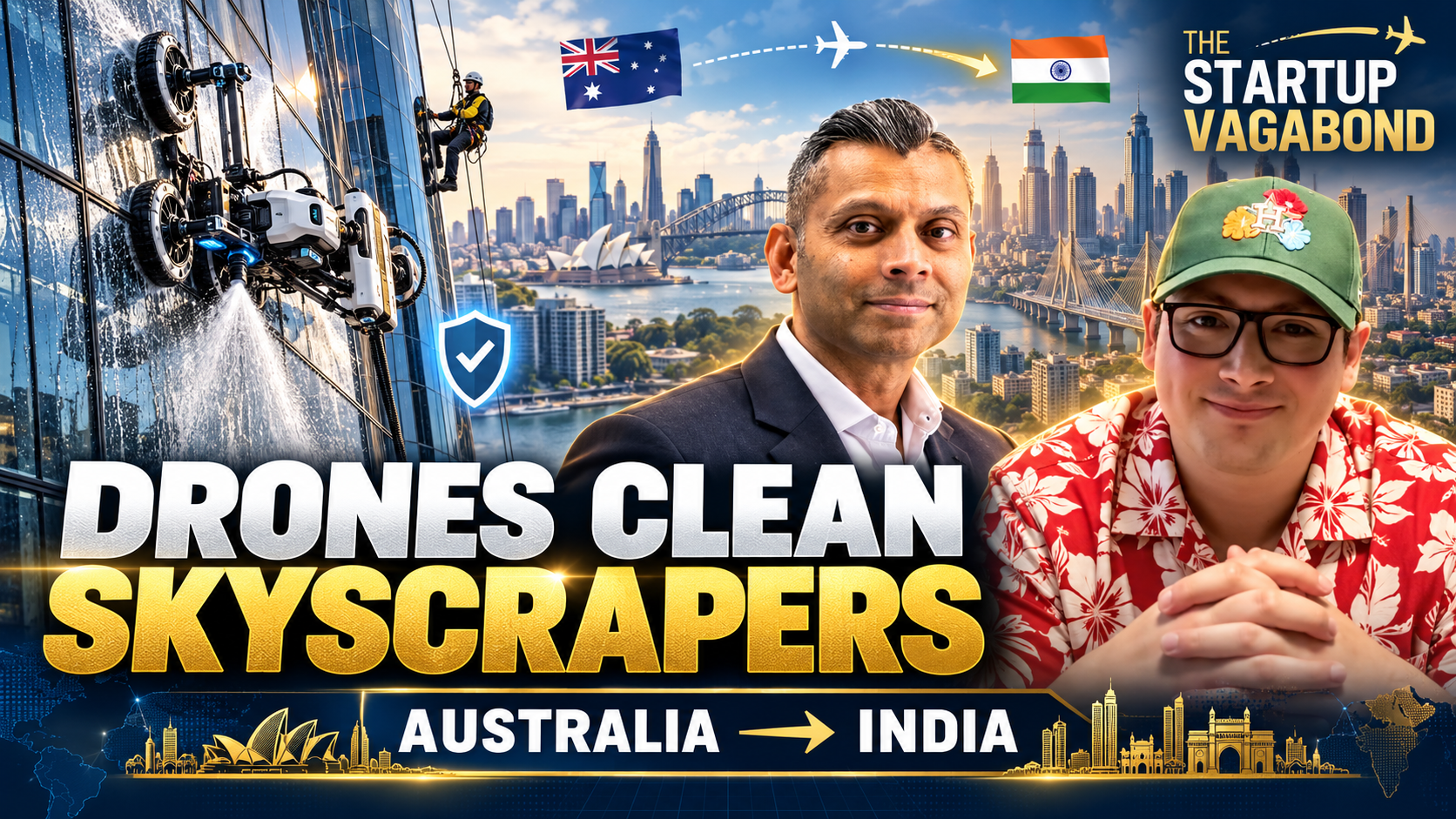
This episode of The Startup Vagabond is a conversation with Mikhil Kotak, founder of FAMASO, about drone cleaning, building maintenance, Australia, India, and how robotics can make dangerous physical work safer.
Mikhil’s path into entrepreneurship was not a straight line. He moved from Mumbai to Australia, trained as a pilot, worked in IT, tried the restaurant business, learned some expensive lessons, and eventually built a window-cleaning business from the ground up.
After more than a decade in traditional building services, he saw an opportunity to bring drone cleaning technology into Australia. The goal was not just to use drones because they looked futuristic. The real opportunity was reducing risk, improving safety, and modernizing an industry still heavily dependent on rope access, manual labor, and old service relationships.
We talk about why introducing new technology into a traditional market is harder than people think. Mikhil brought drone cleaning to Australia, ran demonstrations, educated customers, and eventually built trust in a market where many clients were interested in innovation but slow to actually adopt it.
Now, he is expanding the FAMASO model into India, where he sees a major opportunity for safer, modern building maintenance. India has the technical talent and enormous urban demand, but Mikhil argues the missing piece is combining drone technology with real domain expertise in facade cleaning, rope access, elevated work platforms, and building maintenance.
We also discuss the difference between the Australian and Indian startup ecosystems, why India may have a larger early-adopter market, and how robotics can extend workers’ careers instead of replacing them. Experienced rope-access workers understand risk, buildings, and safety better than anyone. Drones can help them apply that expertise with less physical strain.
The broader takeaway: the best robotics opportunities may come from people who deeply understand traditional industries and know where technology can make the work safer, faster, and more scalable.